Preferred Seed:
Mealworms, Suet, Cracked corn, Sunflower hearts, Fruit
Description:
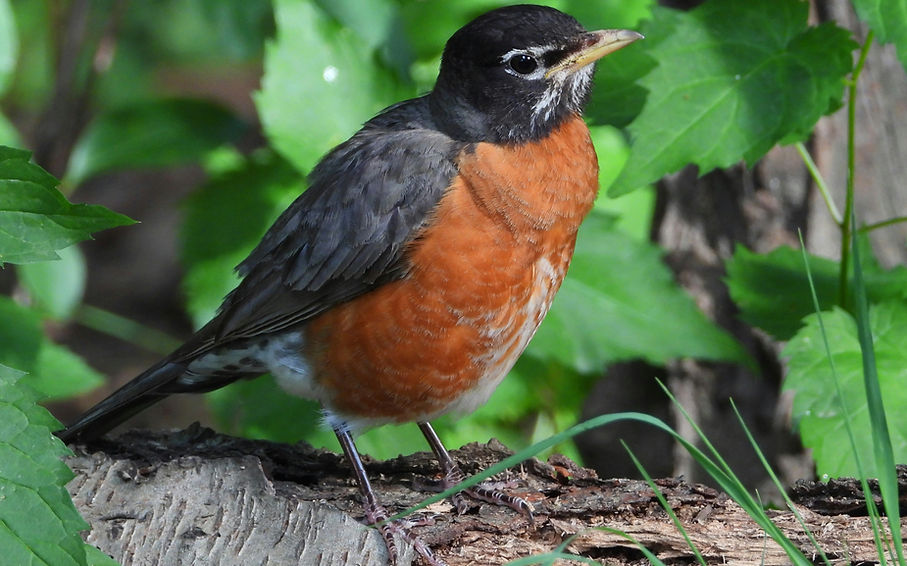
The American Robin is one of the most recognizable backyard birds in North America. Known for its warm orange breast and cheerful song, robins are often seen hopping across lawns searching for worms and insects. While they rarely visit traditional seed feeders, they will happily stop by for mealworms, fruit, or suet placed on a platform feeder.
Feeder Type:
Platform, Ground
Nesting:
American Robins build sturdy cup shaped nests made from grass, twigs, and mud. Nests are usually placed on tree branches, ledges, porch lights, or other sheltered structures around homes.
Identification:
A large thrush with a warm orange breast, gray brown back, and yellow bill. Males and females look similar, though females may appear slightly duller. Juveniles are spotted on the chest before developing the familiar solid orange coloring.
Song Description:
A cheerful series of clear whistled phrases often described as “cheerily, cheer up, cheer up, cheerily.” Robins are among the first birds to sing at dawn in spring.
How to Attract:
• Offer mealworms or fruit on a platform feeder
• Leave some lawn space open for natural foraging
• Provide shallow bird baths for drinking and bathing
• Plant berry producing shrubs and native fruiting trees
• Avoid using pesticides that reduce insect food sources
Fun Fact:
American Robins often tilt their heads while standing on lawns because they are listening for earthworms moving underground before pulling them from the soil.
Residency:
Year round in much of the United States
Summer breeding range extends across Canada
Winter populations move south in colder regions
Region:
United States, Southern Canada, Mexico
Range Map:


Range Map 2025/2026 © Chirp Nook
Best Bird Food For
American Robin

American Robin